The contractors packed up, the new quartz counters are in, and the room looks finished. Then a few days go by and there's a gray film on the baseboards, the windowsills, the tops of the picture frames. You wipe it down. Two days later it's back. That's post-construction dust, and it doesn't leave when the crew does.
Remodeling dust is not the same as the dust that settles on a bookshelf over a month. Drywall sanding, tile cutting, and demo throw a fine powder into the air that's light enough to stay airborne for hours. It works its way into every gap, sits on top of door frames, and rides your air conditioning through the whole house. In Central Florida, where the AC runs most of the year and the humidity is high, that dust behaves in ways it wouldn't up north. This guide covers why it lingers, why one deep clean rarely finishes the job, and how to actually get ahead of it.
We're Krystal View Cleaning, a family-owned crew based in Davenport. We handle post construction cleaning in Florida homes and vacation rentals across Polk, Osceola, Orange, Lake, and Seminole counties, so a lot of what follows comes from what we actually run into on these jobs.
Why remodel dust hangs around long after the crew leaves
The dust from cutting drywall, sanding joint compound, or scoring tile is measured in microns. It's fine enough that a lot of it never settles while there's activity in the house. People walking through, doors opening, the AC cycling on and off, all of it keeps that powder moving. When the work finally stops, the dust starts drifting down, but it does so slowly and in waves. That's the part homeowners don't expect: you can do a thorough clean on Monday and still have a fresh gray film by Thursday.
There's also the matter of where it hides. Fine dust doesn't just land on the flat surfaces you can see. It settles on top of upper cabinets, inside the tracks of new windows, on the blades of ceiling fans, along the top edge of every door, and down inside the return vents. Miss those spots and they keep re-seeding the room every time air moves through.
So the goal after a remodel isn't one heroic scrub. It's a first pass to pull out the bulk of it, then lighter follow-up cleaning over the next week or two while the last of the airborne dust comes down.
How Florida's climate makes construction dust worse
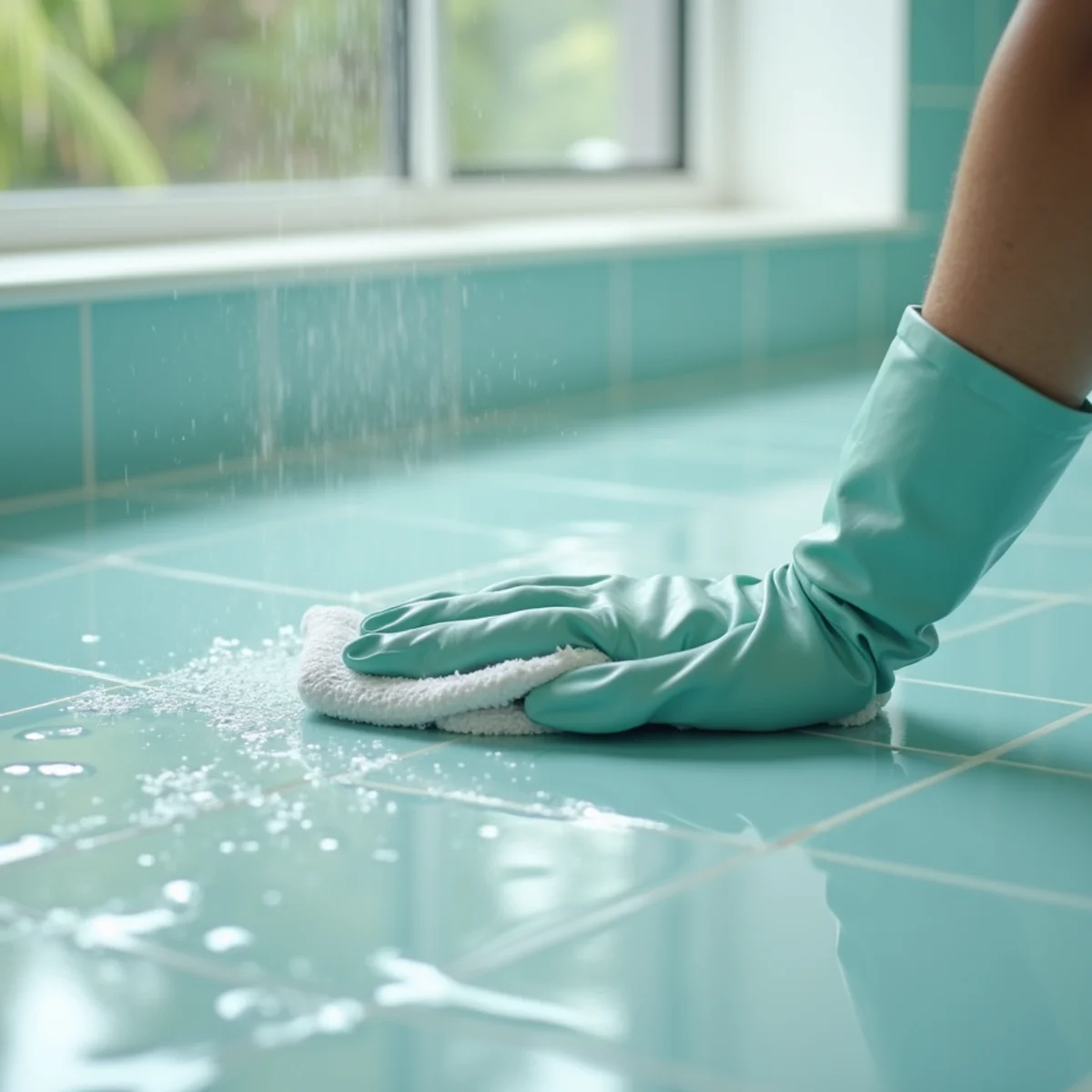
Two things about living here change how remodel dust behaves. First, humidity. When drywall or concrete dust meets damp air, it doesn't stay a loose powder you can vacuum. It gets tacky and bonds to surfaces, especially glass, baseboards, and bathroom tile. A dry wipe smears it instead of lifting it. That's why a job that looks easy on paper turns into a scrubbing session on a muggy afternoon.
Second, your air conditioning. In most of Central Florida the AC runs nearly year-round, which means it's pulling air (and whatever fine dust is floating in it) through the return, across the filter, and back out through every supply vent in the house. A remodel in one bedroom can leave a dusty film two rooms away. It also means the AC filter loads up fast during and after construction, and a clogged filter pushes the system to work harder and recirculate more dust.
Add in the mildew factor. If damp construction dust sits in a poorly ventilated bathroom or on a lanai, it gives mildew a surface to take hold. Getting the residue off promptly is part of keeping that from starting.
The room-by-room post-construction dust checklist
The order matters. Always work top to bottom, because anything you knock loose up high lands on what you've already cleaned. Do the ceilings and high spots first, floors last.
- Ceilings, fans, and light fixtures: dust ceiling fan blades and the tops of fixtures before anything else, since they shed onto everything below.
- Walls and door frames: fresh paint and drywall hold a fine film. Dry-dust walls first; the top edge of every door frame is a classic hiding spot.
- Windows, sills, and tracks: fine dust cakes into window tracks and screens. Vacuum the tracks, then wipe. Don't forget the lanai slider.
- Upper cabinets and shelves: run a cloth across the tops of cabinets and any high shelving, even if you can't see them from the floor.
- Counters, cabinets, and drawers: wipe inside drawers and cabinet boxes, not just the fronts. Drywall dust settles inside them during the build.
- Baseboards and trim: humidity makes this dust cling, so a damp microfiber cloth works better than dry.
- HVAC vents and returns: wipe supply registers and vacuum the return grille. Plan to change the AC filter right after the first clean.
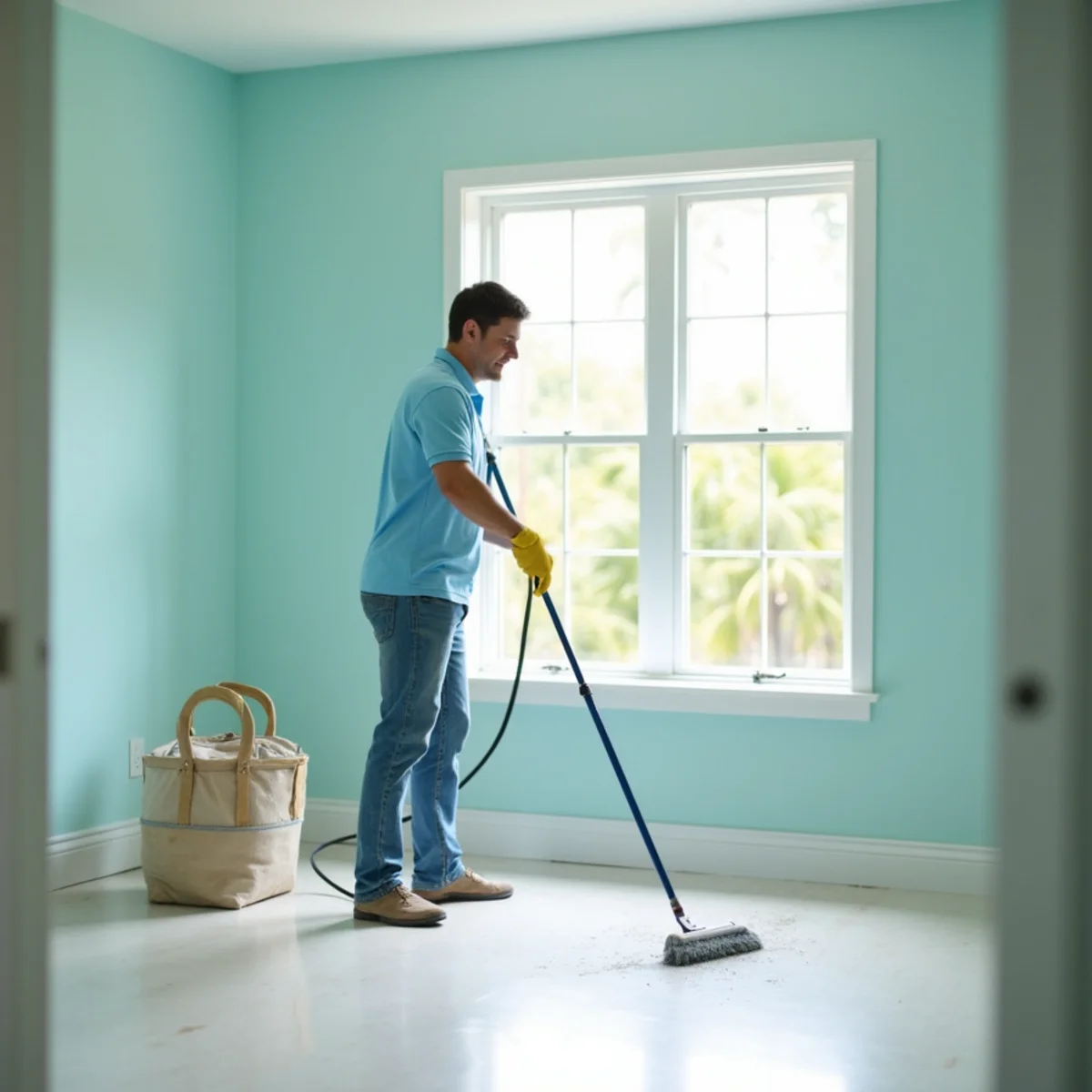
- Floors: vacuum first to lift the grit, then damp-mop. On tile, grout lines trap the finest dust, so a second pass is normal.
- Final flashlight check: angle a light low across counters and floors. Fine dust and streaks that overhead light hides show up instantly.
Don't skip the air conditioning after a remodel
This is the step people forget, and in Florida it's the one that keeps dust coming back. Your AC filter acts like a net during construction and catches a lot of the airborne powder. After the first cleanup, swap it for a fresh one, then check it again in a week or two, because it can load up fast while the last of the dust settles out of the air.
Wipe down the supply registers in the rooms near the work and vacuum the return grille. If the return had no filter, or a cheap one, during the remodel, expect dust to have made it into the ductwork. Duct cleaning is a separate job for an HVAC company, but keeping the vents and filter clean on your end does a lot to stop the recirculation cycle.
A quick tip during any future work: have the crew tape off return vents in the work area so the system isn't actively pulling dust through the whole house. It's a small thing that saves a lot of cleanup.
Why one clean is rarely enough
The single most useful thing to understand about post-construction dust is that it comes down in stages. The first clean handles what has already settled and the bulk of what's on surfaces. But there's still fine dust suspended in the air, and it keeps landing for days. This is why professional crews plan the work in passes rather than one marathon.
A realistic approach for a home remodel looks like this: a thorough first clean once the crew is fully done, then a lighter touch-up a few days later to catch the settled fallout, and often a third light pass a week or so after that. For a bathroom or single-room job the timeline is shorter. For a whole-house renovation it can run a couple of weeks of periodic light cleaning before surfaces truly stay clean.
Trying to do it all in one shot usually means you clean, the room looks great for two days, and then you're annoyed all over again. Planning for the follow-up saves the frustration.
When to bring in a cleaning crew (and what we handle)
Plenty of homeowners handle a small remodel cleanup themselves, and there's nothing wrong with that. It's worth calling in help when the dust is fine drywall or tile dust across a large area, when you don't have the time to do the multi-pass follow-up, or when it's a rental that needs to be guest-ready fast.
That last one is a big part of what we do. A lot of the homes we clean in the Davenport and ChampionsGate area are vacation rentals near Disney, and a remodel between bookings means the place has to go from dusty to spotless on a tight window. We build the post-construction clean and the follow-up passes around your turnover schedule so a guest never walks into gritty counters or a hazy shower door.
We use non-toxic products like Bon Ami, which matters after a remodel when you want the house safe for kids and pets right away, not full of harsh chemical residue on top of the dust. And with lockbox or code access, we can get the work done without you having to be there. If something isn't right when you check, the Krystal Clean Guarantee means you tell us within 24 hours and we re-clean that area free. Free estimates if you want a number before you commit: call 877-754-5614.